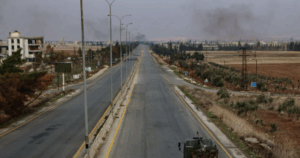
“The Americans drove through here,” the Syrian army guard said, pointing to a steep road behind him. “I don’t know where they headed, I’m not allowed up there.”
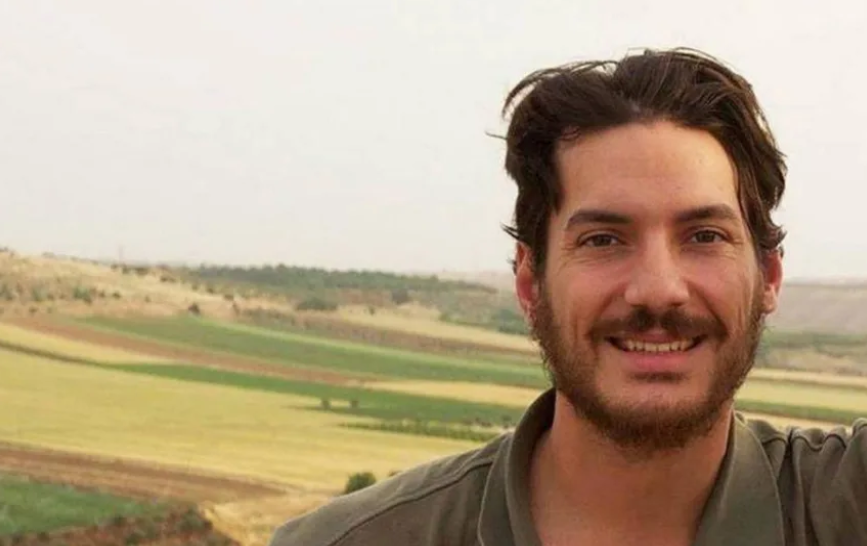
The barricaded road leads to a labyrinth of military facilities wedged into the rocky slopes of Mount Qasioun on the outskirts of the Syrian capital Damascus. It was as close as CNN could get to the locations searched by an FBI-led team that came here in September looking for traces of American journalist Austin Tice — more than a decade after he disappeared.
The American team was hard to miss, arriving in a convoy of armored vehicles. Their objective was two-fold: to search for the place where Tice was last believed to have been held and, if possible, to find his remains.
The US search focused on a facility called the Syrian Scientific Studies and Research Center. It lasted less than three days. On September 9, Israel launched its explosive attack on Qatar and the delegation abruptly left.
The tip that led to the US search came from several witnesses, including Bassam Al-Hassan, a powerful adviser to former Syrian President Bashar al-Assad and the man who held Tice after his capture in mid-August 2012.
For 13 years, the mystery of what happened to Austin Tice has plagued multiple US administrations. Then, after the fall of the Assad regime in December 2024, witnesses began to emerge. After fleeing to Iran, Al-Hassan made his way to Beirut, Lebanon in April, where he was interrogated by FBI investigators, along with several associates, about Tice’s capture.
In September, CNN managed to track the apartment where Al-Hassan was living in Beirut. After knocking on his door, the team introduced themselves as CNN journalists. During a 20-minute conversation, the first time he’s been confronted by a journalist, Al-Hassan told CNN that Assad ordered the execution of Tice.
“Of course, Austin is dead. Austin is dead,” he said, his comments captured on video by hidden cameras worn by the team. He nodded yes when asked if Tice was killed in 2013, saying that he had passed the execution order down to a subordinate.
“I don’t want to protect Bashar al-Assad because he abandoned and left us,” Al-Hassan added. “I don’t want to protect Russia or Iran, because the US thinks Russia and Iran have something to do with the case. And I can assure you that this is not the case. This relates to President Bashar only,” he said.
Assad fled to Russia after the collapse of his regime and attempts by CNN to reach him were unsuccessful.
Al-Hassan claims he passed the execution order onto a subordinate in the notorious Iran-backed, pro-government militia the National Defense Forces (NDF). CNN has learned the man in question is now in Russia. Through an intermediary, he refused to respond to CNN’s questions.