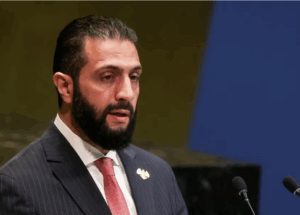
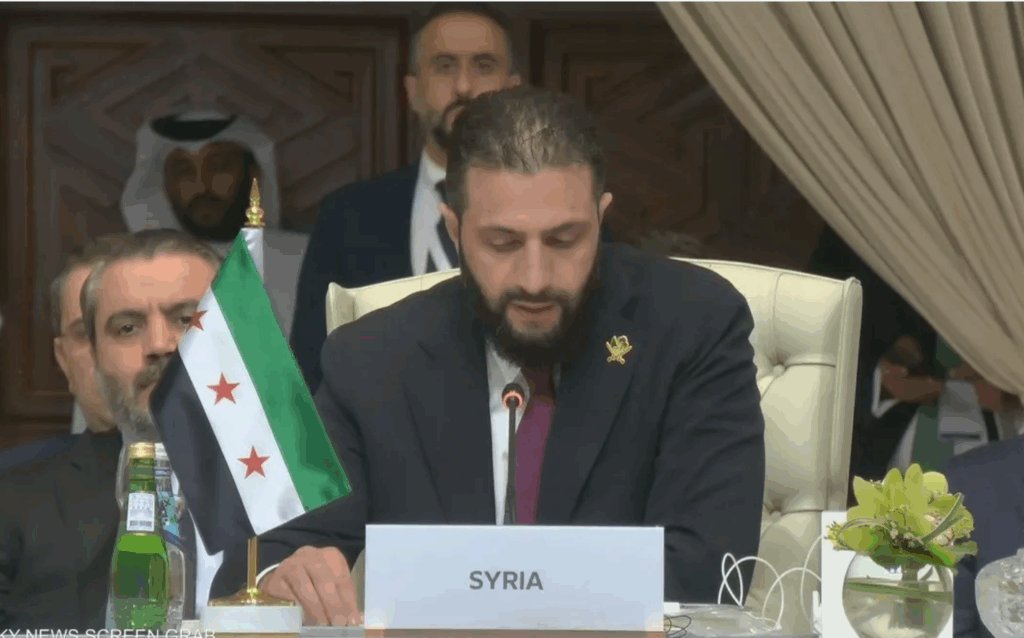
After six decades of absence from the United Nations General Assembly hall, a Syrian president returns to New York as an active participant.
President Ahmad Al-Sharaa arrives at a tense moment, carrying heavy files, most notably the crippling sanctions on Damascus and the future of southern Syria.
While Al-Sharaa looks forward to a possible meeting with U.S. President Donald Trump, the key question arises: will he emerge from this visit with a deal that reshuffles the south and restores Syria’s position on the international stage, or will it be merely a beautiful headline without binding terms?
Between the Legacy of 1974 and New Maps
Al-Sharaa’s visit to New York comes amid ongoing debate over the future of the 1974 Disengagement Agreement. Israel seeks to impose a new reality beyond the lines of that agreement, proposing the expansion of demilitarized zones, strengthening aerial control, and establishing observation points reaching the outskirts of Damascus. In contrast, Damascus advocates for the reactivation of the 1974 agreement while maintaining Syrian sovereignty under international oversight.
The issue extends beyond technical details to a deeper question: are we witnessing a deal that stops the shelling, opens crossings, and secures borders without undermining sovereignty, or is this a long-term ceasefire?