The World Bank on Tuesday estimated the cost of rebuilding Syria at around $216 billion, following a conflict that lasted more than 13 years, which drained the economy and caused widespread destruction.
Reconstruction is one of the major challenges facing the transitional authority since the ousting of former President Bashar al-Assad about a year ago.
According to the World Bank report, “the estimated cost of reconstruction in Syria after more than 13 years of conflict is around $216 billion,” based on an assessment covering the period from 2011 to 2024.
The conflict that began in 2011, the report noted, “damaged roughly one-third of Syria’s pre-war total capital.”
Direct physical damage to infrastructure and residential and non-residential buildings is estimated at $108 billion, including $52 billion in infrastructure alone.
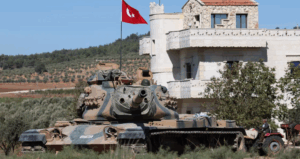
In terms of total damage, the provinces of Aleppo (north), Rural Damascus, and Homs (central) were the most affected. During the early years of the conflict, major cities in these provinces were strongholds of opposition factions, subjected to heavy bombardment, strict sieges, and subsequent evacuation of residents.
Since 2011, Syria has experienced a devastating conflict that drained economic resources, destroyed infrastructure and homes, and resulted in the deaths of over half a million people, according to the Syrian Observatory for Human Rights.
The United Nations had previously estimated in 2018, after a significant decline in fighting, that the cost of destruction in Syria exceeded $400 billion.
The World Bank report forecasts that “reconstruction costs for damaged physical assets will range between $140 billion and $345 billion,” noting that “a conservative best estimate is $216 billion,” distributed as $75 billion for residential buildings, $59 billion for non-residential facilities, and $82 billion for infrastructure.
The estimated reconstruction cost is roughly ten times Syria’s projected GDP for 2024, highlighting the scale of the challenge and the urgent need for international support, according to the report.
Jean-Christophe Carret, Regional Director for the Middle East at the World Bank, said: “The challenges are enormous, but the World Bank is ready to work alongside the Syrian people and the international community to support recovery and reconstruction efforts.”
Syria is relying on support from allied and friendly countries, particularly Gulf states, to advance the rebuilding of areas and infrastructure damaged by the war.
Since the ousting of Assad, the new authorities have signed dozens of agreements and memoranda worth billions of dollars with multiple parties, including Qatar, Turkey, and Saudi Arabia, to rebuild and rehabilitate damaged sectors such as transportation, energy, and electricity.
Syrian Finance Minister Mohammad Yasar Barniya described the World Bank report as “an important basis to assess the massive destruction and reconstruction costs awaiting us.”
He added: “Now, more than ever, it is essential for the international community to mobilize support and form partnerships to help Syria restore basic infrastructure services, revitalize local communities, and lay the foundation for a more resilient future for its people.”